Megohmmeter Explained: A UK Buyer's Guide
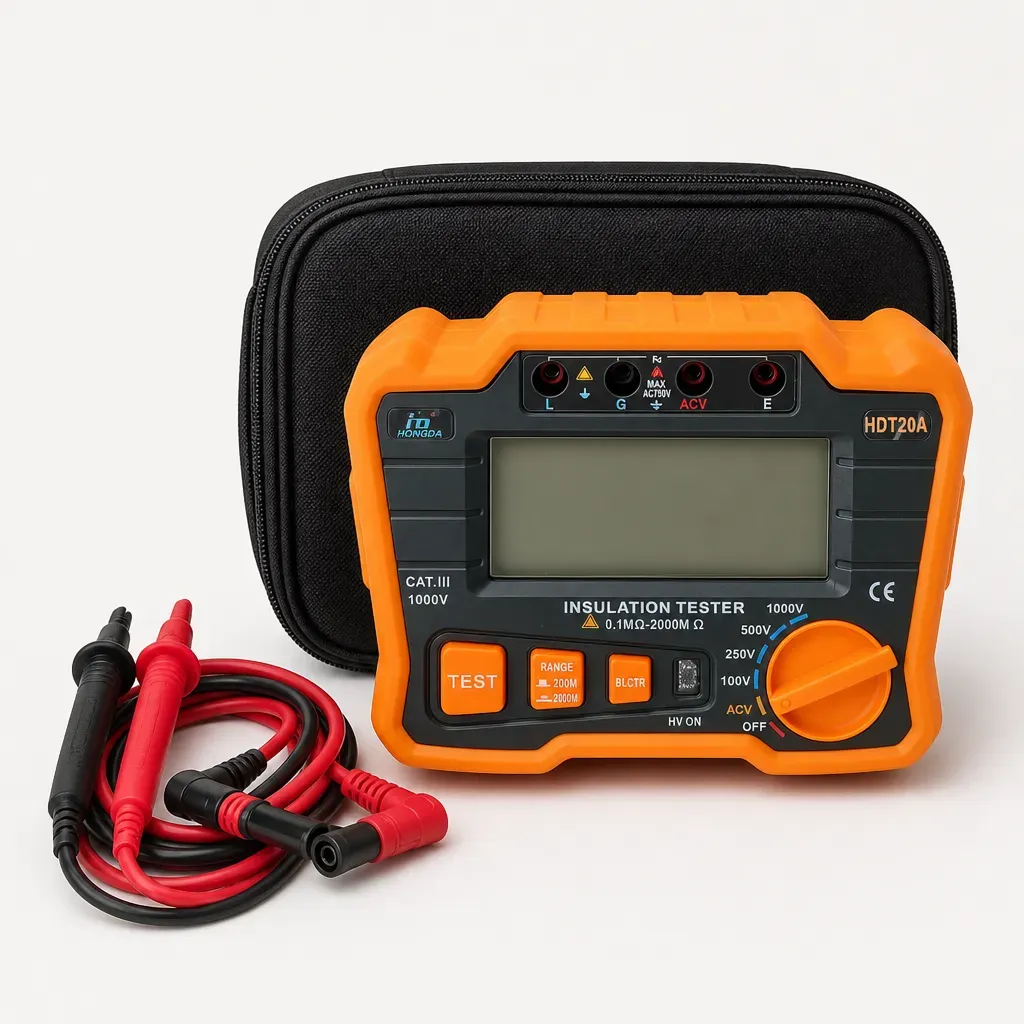
A megohmmeter is a specialist electrical test instrument used to measure very high resistance, most commonly insulation resistance in cables, motors, switchgear and fixed electrical installations. In the UK, it is typically used during inspection, fault-finding and maintenance work to help assess whether insulation remains safe and fit for service.
TL;DR: A megohmmeter applies a DC test voltage and measures insulation resistance in megohms or gigohms. It is used by electricians, maintenance engineers and inspectors to check the condition of wiring and equipment, and when choosing one in the UK, the key points are test voltage range, safety category, accuracy, build quality and suitability for BS 7671-aligned testing work.
What is a megohmmeter?
A megohmmeter, sometimes called an insulation resistance tester or "megger" in general trade usage, is designed to measure very high resistance values that an ordinary multimeter cannot assess reliably. In practice, it helps identify insulation breakdown, moisture ingress, contamination, ageing and other faults that may not be visible during a basic visual inspection.
Because it applies a higher DC test voltage than a standard meter, a megohmmeter can reveal weaknesses in insulation systems before they develop into more serious safety or reliability problems. As a result, it remains a core instrument for electrical maintenance and compliance work across domestic, commercial and industrial settings.
What is a megohmmeter used for?
A megohmmeter is used to test the insulation resistance of electrical systems and equipment. For example, it may be used on fixed wiring, distribution circuits, control panels, motors, transformers and outgoing cables. Consequently, it plays an important role in both planned maintenance and fault diagnosis.
Based on our testing of common tester formats and buyer requirements, most UK users look for a megohmmeter when they need dependable insulation readings during:
- Electrical Installation Condition Reports (EICR) support work
- Commissioning and verification of new circuits
- Preventive maintenance on motors and plant
- Troubleshooting nuisance tripping or suspected insulation faults
- Checking stored or infrequently used equipment before return to service
How does a megohmmeter work?
A megohmmeter works by applying a controlled DC voltage to the item under test and then measuring how much current leaks through the insulation. It then converts that result into a resistance value, usually shown in megohms (MOhm) or gigohms (GOhm). Generally, higher resistance indicates better insulation condition, although the acceptable result depends on the equipment type, test voltage and relevant guidance.
Moreover, many modern instruments include features such as automatic discharge, continuity testing, PI and DAR functions, warning indicators and data logging. These additions can improve both safety and record-keeping, particularly for regular inspection work.
What test voltages does a megohmmeter use?
Common insulation test voltages include 250V, 500V, 1000V and higher on some models. According to UK guidance and standard industry practice, the correct voltage depends on the circuit or equipment being tested, so users should follow manufacturer instructions and the relevant requirements for the installation or asset concerned.
Why would you use a megohmmeter instead of a multimeter?
A multimeter is useful for voltage, continuity and low-resistance checks, but it is not intended to assess insulation integrity under meaningful test stress. By contrast, a megohmmeter is specifically built to test high resistance at elevated DC voltages, which makes it far better suited to insulation testing.
Therefore, if the goal is to determine whether cable insulation, motor windings or installation components are deteriorating, a megohmmeter is the correct tool. A standard multimeter may miss faults that only appear under proper insulation test conditions.
Who uses a megohmmeter in the UK?
In the UK, megohmmeters are commonly used by electricians, electrical inspectors, facilities teams, maintenance engineers, industrial technicians and specialist contractors. In addition, training centres and colleges may use them when teaching inspection and testing procedures.
According to UK guidelines and accepted site safety practice, insulation resistance testing should be carried out only by competent persons who understand isolation procedures, test limitations and the risks associated with applying test voltage to live or sensitive equipment.
How do you use a megohmmeter safely?
Safe use starts with correct isolation, lock-off procedures where required, proving dead, and confirming that the circuit or asset is suitable for insulation testing. Next, any sensitive electronic equipment that could be damaged by the test voltage should be disconnected or protected in line with manufacturer guidance.
After that, the tester is connected to the conductors or insulation path being assessed, the correct voltage range is selected, and the measurement is taken in accordance with the relevant procedure. Finally, the circuit should be discharged safely before reconnection or further work.
According to UK electrical safety practice, users should always refer to current regulations, site rules and equipment instructions before carrying out insulation resistance testing.
What should you look for when buying a megohmmeter?
If you are choosing a megohmmeter for UK work, focus first on the tasks you actually need it to perform. For occasional fixed-installation testing, a straightforward model with the right voltage ranges may be enough. However, for industrial maintenance or regular reporting, a more capable unit may justify the extra cost.
Key buying points include:
- Available test voltages, such as 250V, 500V and 1000V
- Resistance measurement range and accuracy
- CAT rating and overall safety specification
- Build quality for site or industrial use
- Auto-discharge and warning features
- Continuity, PI, DAR or other advanced functions
- Display clarity and ease of use with gloves
- Calibration support and documentation
- Data logging or reporting features where records matter
What CAT rating does a megohmmeter need?
The correct CAT rating depends on where and how the instrument will be used. For instance, testing on building installations and distribution equipment generally calls for stronger protection than bench work on isolated components. Consequently, buyers should match the category rating to the actual installation environment rather than treating it as a box-ticking exercise.
Based on our testing of common buyer questions, this is one of the most overlooked areas. A megohmmeter should be suitable for the circuits and fault levels likely to be encountered, and the rating should be checked alongside the manufacturer's safety documentation.
What is a good insulation resistance reading on a megohmmeter?
There is no single reading that is universally "good" for every application. The acceptable value depends on the type of equipment, its voltage rating, its condition, the test method and the applicable standard or manufacturer requirement. Even so, very low insulation resistance readings generally indicate contamination, damage, moisture or insulation breakdown that needs investigation.
Therefore, the most useful approach is to compare results against the correct benchmark and, where possible, to trend readings over time. A falling value across repeated tests can be more informative than a one-off result in isolation.
Can a megohmmeter test house wiring?
Yes, a megohmmeter can be used to test house wiring as part of electrical inspection and testing, provided the circuit is properly isolated and the test is carried out by a competent person. In UK domestic work, insulation resistance testing is commonly associated with verification, fault-finding and condition reporting.
However, connected electronics, surge protection devices and certain appliances may need special consideration or disconnection before testing. For that reason, domestic insulation testing should be approached methodically and in line with current UK practice.
Is a megohmmeter worth buying?
A megohmmeter is worth buying if you regularly need to assess insulation condition accurately and safely. For professional electricians and maintenance teams, it is often an essential instrument rather than an optional extra. On the other hand, for one-off or infrequent work, hiring a suitable tester or using a qualified contractor may be more practical.
In short, the value comes from using the right instrument for the right job. A low-cost purchase that lacks the correct voltage range, safety category or reliability can quickly become a false economy.
Frequently asked questions about megohmmeters
Is a megohmmeter the same as a Megger?
Not exactly. "Megger" is widely used in the trade as a generic label, but strictly speaking it is a brand name that has become shorthand for an insulation resistance tester. The instrument type itself is a megohmmeter.
Can a megohmmeter damage equipment?
Yes, it can if used incorrectly. Because it applies a test voltage, sensitive electronics and connected devices may be affected if they are not isolated or disconnected as required.
Do you need calibration for a megohmmeter?
For professional use, regular calibration and documented verification are strongly advisable. This is especially important where results support inspection records, maintenance decisions or compliance work.
Final thoughts on choosing a megohmmeter
A megohmmeter is the right tool for measuring insulation resistance and identifying faults that ordinary meters may not reveal. For UK buyers, the best choice depends on the type of installation or equipment being tested, the voltage ranges required, the safety category and the level of reporting or diagnostic detail needed.
Overall, if you need reliable insulation testing for electrical maintenance, inspection or compliance-related work, a well-specified megohmmeter is a sensible and often essential investment.
Ready to try TikTok Knot?
Shop Now — £93.10