Motor Insulation Tester Explained: A UK Buyer's Guide
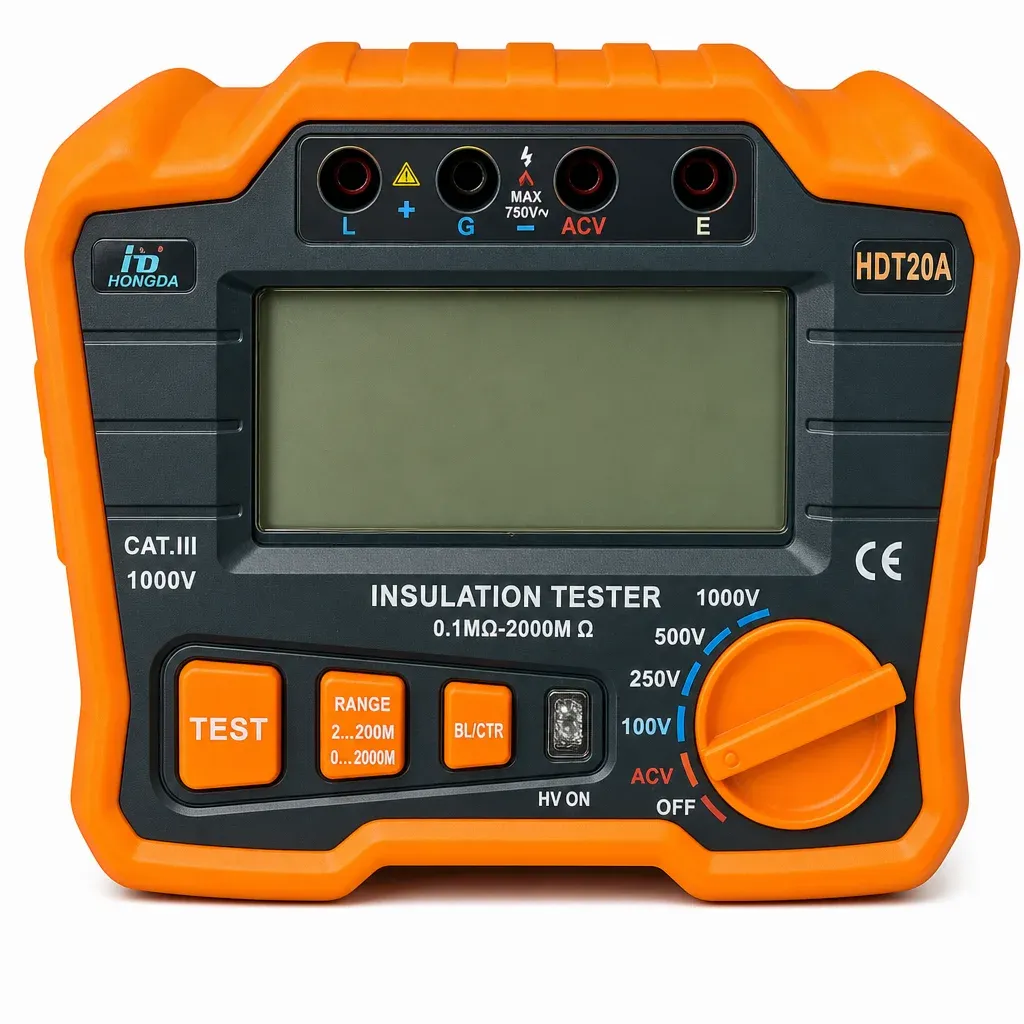
Electric motor faults rarely announce themselves politely. A fan slows down, a pump starts tripping, a workshop machine overheats, or a critical drive drops out with no warning. In many cases, insulation breakdown is part of the story. That is where a motor insulation tester becomes a practical diagnostic tool rather than a nice-to-have extra.
For UK buyers, choosing the right tester is not only about voltage range or display type. It is also about safe working practice, compliance, realistic use cases, and whether the instrument will help you make sound maintenance decisions on-site. This guide explains what a motor insulation tester does, what specifications matter, and how to choose one for motors used in facilities, workshops, plant rooms and industrial settings across Britain.
Key Takeaways
- A motor insulation tester measures insulation resistance between motor windings and earth, helping identify moisture, contamination, ageing and developing failure.
- For many UK maintenance tasks, a tester with 250 V, 500 V and 1,000 V test ranges covers common low-voltage motor work.
- Useful features include DAR/PI testing, continuity, live circuit warning, CAT safety rating and clear data hold or memory functions.
- Results should be interpreted in context: temperature, motor size, winding condition and trend history all matter.
- Safe isolation and competent use are essential under UK electrical safety practice.
What is a motor insulation tester?
A motor insulation tester is a specialist electrical test instrument used to measure the resistance of insulation within a motor. It applies a DC test voltage and measures how effectively the insulation resists leakage current. In plain terms, it helps you check whether the insulation separating live conductors from earth, and winding from winding, is still doing its job.
Motors operate in demanding conditions. Dust, oil mist, vibration, damp, heat cycling and simple age all affect insulation systems over time. A standard multimeter cannot properly assess insulation integrity because it does not apply the higher DC voltages needed for meaningful resistance testing. That is why maintenance teams, electricians and engineers rely on dedicated insulation testers when checking motor condition.
On many sites, the instrument may also be referred to as a megohmmeter or “megger”, though that latter term is often used generically in the trade. The core function remains the same: measuring insulation resistance in megohms or gigohms to reveal whether a motor is healthy, deteriorating or unsafe to energise.
Why motor insulation testing matters in the UK
Motor failure is expensive in any setting, but the cost rises quickly where downtime affects production, building services or essential environments. A failed motor in a commercial extraction system, heating plant, manufacturing line or water pump installation can trigger disruption well beyond the component itself.
UK health and safety expectations place clear emphasis on maintaining electrical systems so that danger is prevented. The Electricity at Work Regulations 1989 require systems to be constructed and maintained so far as is reasonably practicable to prevent danger. Insulation testing supports that duty by helping competent persons identify deterioration before it becomes an energised fault.
There is also a practical reliability argument. According to the Electrical Safety First guidance on electrical risks in buildings and maintenance awareness, damaged insulation remains one of the recurring causes behind electrical hazards in the built environment. While that guidance is broader than motors alone, the principle is directly relevant: insulation defects are not abstract test results; they are early warnings of real failure modes.
In critical facilities, continuity of service matters just as much as compliance. NHS estates, universities, food production sites and commercial property operators often work to planned maintenance regimes where identifying a weakening motor before breakdown is materially cheaper than dealing with emergency call-outs, consequential damage and lost operating time.
How a motor insulation tester works
The instrument applies a controlled DC voltage to the motor winding insulation and measures the small leakage current that flows through or across that insulation. It then calculates resistance using Ohm’s law. Strong, dry, intact insulation resists current flow and produces a high resistance reading. Damaged, dirty or damp insulation permits more leakage and gives a lower reading.
Typical test points on a motor
- Phase to earth
- Winding to frame
- Phase to phase, where appropriate and in line with the motor configuration
The correct method depends on the motor type, whether it is disconnected, how the terminals are arranged, and what the manufacturer specifies. Testing should only be carried out by a competent person following safe isolation procedures.
Common test voltages
Most motor insulation tester models for low-voltage work offer one or more of these DC test voltages:
- 250 V
- 500 V
- 1,000 V
- 2,500 V or higher on advanced instruments
For many motors found in UK commercial and industrial environments, 500 V is a commonly used test level, though this should match the motor rating, condition and manufacturer guidance. Higher test voltages are not automatically better. The point is to obtain a meaningful reading without overstressing the insulation system.
What a motor insulation tester can reveal
A single insulation resistance reading can flag an obvious defect, but the real strength of the tool lies in identifying patterns. Used properly, it can help reveal several common problems.
Moisture ingress
Motors stored in unheated spaces or operating in damp environments often show reduced insulation resistance because moisture creates a conductive path across insulation surfaces. This is common after prolonged shutdowns or where condensation forms in plant rooms and outbuildings.
Contamination
Dust, carbon, grease and process residue can all lower insulation readings. In some cases the winding insulation itself remains serviceable, but the surface contamination is enough to create leakage.
Thermal ageing
Repeated overheating makes insulation brittle and less effective. If a motor runs hot due to overload, poor ventilation or frequent starts, its insulation system may degrade steadily.
Physical damage
Vibration, poor cable terminations, abrasion and movement during maintenance can compromise insulation around connections and winding exits.
Trend deterioration
A motor may still pass a basic test while showing a decline against previous readings. That trend matters. A maintenance history that falls from hundreds of megohms to tens of megohms over successive intervals deserves investigation even if the motor still runs.
Key specifications to check before you buy
Choosing a motor insulation tester for UK use involves more than selecting the lowest price. The right specification depends on the motors you maintain, the environments you work in and the level of diagnostic detail required.
Test voltage range
Look for a model that covers the motors you actually work on. For routine low-voltage maintenance, 250 V, 500 V and 1,000 V ranges are usually the most useful starting point. If you work on larger plant or need deeper insulation analysis, higher-voltage capability may be justified.
Resistance measurement range
Entry-level testers may read up to a few hundred megohms, while more advanced units meanto the gigohm or teraohm range. Broader range improves usefulness on newer or very dry motors with high insulation values.
Polarisation Index and DAR functions
Polarisation Index (PI) and Dielectric Absorption Ratio (DAR) tests are valuable for assessing winding condition over time. They compare insulation behaviour over a timed interval rather than relying on one instant reading. For maintenance teams dealing with larger or more critical motors, these features are worth having.
Safety category rating
Check the CAT rating and voltage category. This matters for user safety and suitability in real-world panels and distribution environments. A reputable instrument should state its category clearly and comply with applicable test equipment standards.
Live circuit detection
A good motor insulation tester should warn the user if voltage is present before or during testing. This is an important safeguard, not a substitute for proper isolation.
Continuity and low-resistance testing
Some models combine insulation testing with continuity testing. That can be useful for checking bonding paths, leads or associated wiring without carrying separate instruments for every routine task.
Display quality and usability
Backlit screens, clear rotary selectors, robust leads and large buttons make a real difference on-site. If you work in plant rooms, outdoors or in poorly lit service spaces, usability matters as much as headline spec.
How to interpret motor insulation tester readings
This is where many buying guides become too simplistic. There is no single magic number that defines every motor as good or bad. The acceptable value depends on motor rating, insulation class, temperature, age, contamination level and manufacturer recommendations.
Use manufacturer guidance first
The motor manufacturer’s documentation should always take priority. If the maker sets a minimum insulation resistance or a preferred test voltage, use that as the benchmark.
Temperature affects readings
Insulation resistance changes with temperature. A winding tested cold may show a much higher reading than one tested hot. Comparing results taken under similar conditions gives a more reliable picture than comparing isolated numbers with no context.
Trend data is often more useful than a single result
A gradual decline over months can be more meaningful than one apparently acceptable reading. Maintenance professionals often log readings at regular intervals to build a trend line for each asset.
Very low readings need immediate attention
If a motor returns a very low resistance result, do not energise it until the cause is understood. The issue may be moisture, contamination or genuine insulation failure. In each case, the tester has done its job by showing the risk early.
Practical buying advice: a motor insulation tester is most valuable when it helps you compare readings consistently over time, not just when it produces one pass-or-fail number.
Features that matter for UK electricians and maintenance teams
Product listings often major on voltage range alone. In day-to-day use, a few practical features tend to separate a genuinely useful tester from one that stays in the case.
- Robust housing: important for van storage, ladders, plant rooms and industrial floors.
- Replaceable test leads: damaged leads are common in heavy use, so easy replacement reduces downtime.
- Auto-discharge after test: helps discharge capacitive circuits safely after measurement.
- Memory or logging: useful for planned preventive maintenance records and reporting.
- Ingress protection: worth considering if you test in dusty or damp environments.
- Calibration support: UK buyers should check that calibration and aftersales support are available through a reputable channel.
Buyers working across estates, facilities and contracting roles may also prefer recognised test equipment brands with established UK support networks. That usually makes calibration, spares and warranty handling simpler over the life of the instrument.
Safe use of a motor insulation tester
Insulation testing is not a casual task. The instrument generates potentially hazardous test voltages, and motors may retain stored charge after testing. Safe working practice matters at every step.
Before testing
- Isolate the motor properly and prove dead using the correct procedure.
- Disconnect or separate sensitive electronics where required.
- Check the tester, leads and probes for damage.
- Confirm the correct test voltage for the motor and application.
During testing
- Keep clear of exposed conductors.
- Use suitable PPE and follow your site’s risk controls.
- Do not test on live circuits.
- Read and follow the instrument manufacturer’s instructions.
After testing
- Allow the circuit to discharge or use the tester’s discharge function.
- Re-check before touching conductors.
- Record the result with date, temperature and asset reference where possible.
For UK duty holders and contractors, this sits within broader responsibilities under the Electricity at Work Regulations 1989 and established safe isolation procedures. A tester improves diagnosis; it does not replace competence.
Who should buy which type of motor insulation tester?
For occasional maintenance checks
If you only test smaller motors from time to time, a compact model with 250 V, 500 V and 1,000 V ranges, live warning and continuity may be enough. Focus on ease of use, durability and clear safety marking.
For facilities maintenance teams
Where pumps, fans, HVAC motors and plant room equipment are tested routinely, it is worth stepping up to a model with memory, PI/DAR functions and stronger environmental protection.
For industrial engineering work
Larger motors, higher asset criticality and predictive maintenance programmes justify more advanced capability. Look for broader resistance range, timed test functions, higher test voltages where appropriate, data logging and calibration traceability.
For contractors serving multiple sites
Portability, battery life, rugged casing and fast setup become especially important. A contractor-grade instrument should cope with frequent transport and varied working conditions without turning routine testing into a slow process.
A useful statistic for buyers comparing maintenance value
The Health and Safety Executive reports that 135 workers were killed in work-related accidents in Great Britain in 2022/23, with electricity remaining one of the serious workplace hazards that duty holders must control through competent maintenance and safe systems of work. Source: HSE, annual workplace fatal injury statistics and electrical safety guidance. While insulation testing is only one part of electrical maintenance, it supports the wider goal of identifying dangerous deterioration before an incident or major failure occurs.
For buyers balancing tool cost against operational risk, that is the key commercial point: a motor insulation tester is inexpensive compared with the cost of unplanned downtime, emergency labour, damaged equipment or an avoidable safety event.
Buying checklist: what to compare before placing an order
- Does the tester offer the DC test voltages your motors require?
- Is the resistance range broad enough for both fault-finding and healthy motors?
- Does it include PI or DAR if you need deeper condition assessment?
- Is the CAT safety rating suitable for your working environment?
- Are live voltage warning and auto-discharge included?
- Can you obtain calibration and support easily in the UK?
- Are the leads robust, replaceable and suitable for motor terminals?
- Is the display readable in poor light or awkward positions?
- Will the instrument stand up to transport, dust and damp on real jobs?
A strong buying decision usually comes from matching the instrument to your maintenance regime rather than chasing the highest specification on paper.
Why buy from a practical ecommerce supplier
When sourcing workshop and problem-solving products online, buyers tend to value the same things: clear descriptions, realistic benefits, straightforward ordering and products that save time in day-to-day life. That is the same principle behind TikTok Knot’s main offer, summed up by the brand message: create a neat bun in seconds with TikTok Knot. The focus is simple, useful design that removes fuss.
That product-first approach matters in ecommerce generally. Whether you are buying a personal styling tool or browsing a practical guide before purchasing equipment, clear information and honest value make the decision easier. A lightweight bun maker tool for fuller, secure updos without pins, fuss or salon time reflects the same customer expectation seen in tool buying: products should solve a real problem efficiently.
Call to action
Looking for a product that delivers a fast, tidy result without unnecessary complication? Explore TikTok Knot’s signature solution for easy, secure updos.
Frequently Asked Questions
What does a motor insulation tester measure?
It measures insulation resistance by applying a DC test voltage and assessing leakage current through the motor’s insulation. The result helps indicate whether the insulation is dry and healthy or affected by moisture, contamination, ageing or damage.
What test voltage should I use on a motor?
The correct test voltage depends on the motor rating and manufacturer guidance. For many low-voltage motors in UK commercial and industrial settings, 500 V is common, though some applications use 250 V or 1,000 V. Always follow the motor and instrument instructions.
Can I use a standard multimeter instead of a motor insulation tester?
No. A standard multimeter does not apply the higher DC test voltage needed to assess insulation properly. It can check continuity and voltage, but not insulation condition in the same way as a dedicated tester.
Is a low insulation resistance reading always a failed motor?
Not always. A low reading may be caused by damp, dirt or surface contamination, especially after storage or shutdown. It still requires investigation before the motor is returned to service, because the reading shows that the insulation system is not currently performing as expected.
Ready to try TikTok Knot?
Shop Now — £93.10